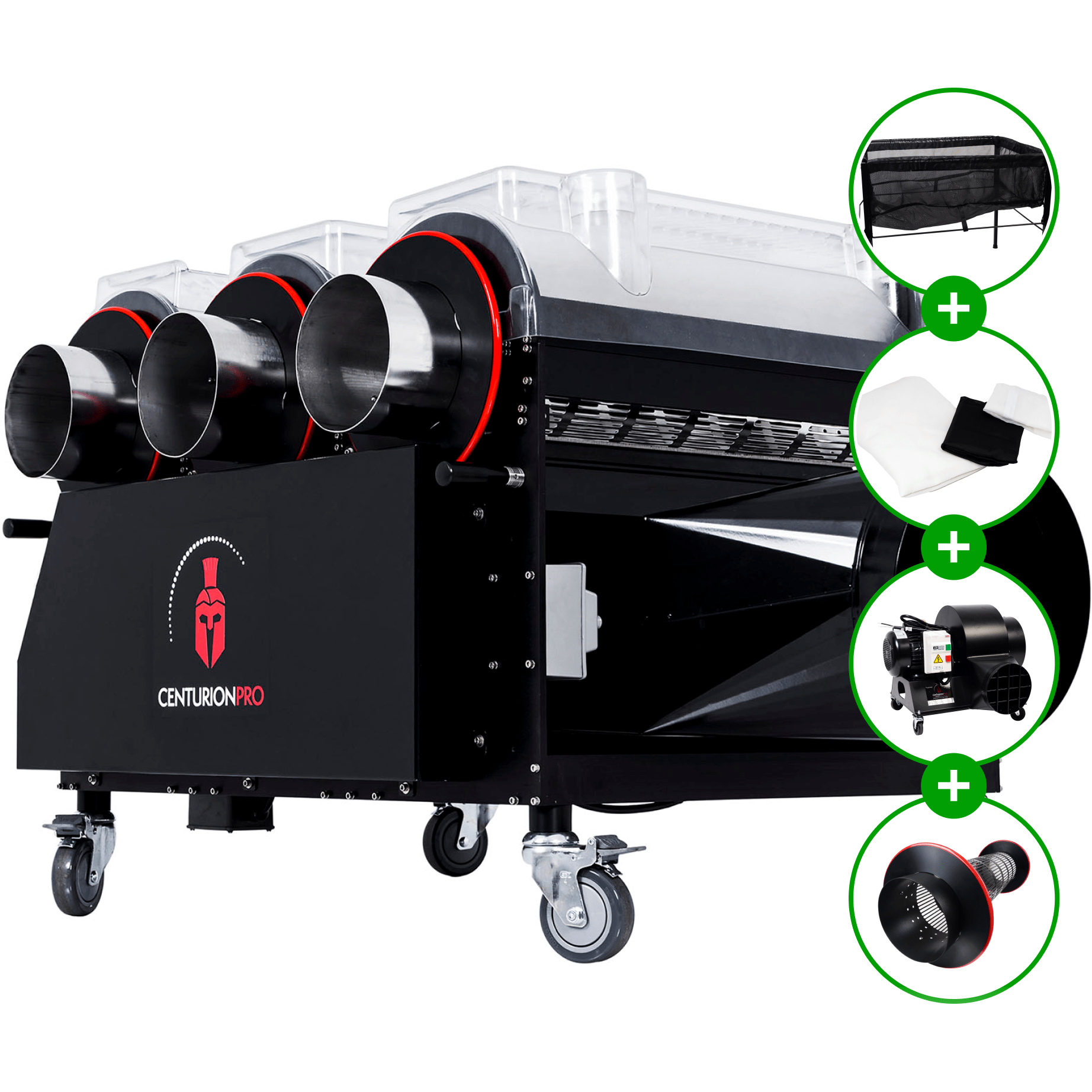
The CenturionPro Tabletop Pro is the most practical choice for Canadian growers, offering versatile wet and dry trimming on a standard 120V circuit. For those prioritizing dry-batch work, the GreenBroz M Lite provides a quieter, budget-friendly alternative. Small commercial operations requiring higher throughput should transition to the CenturionPro Mini for its hybrid performance.
For most Canadian growers buying their first automatic trimmer, the
CenturionPro Tabletop Pro is the practical starting point: built in Surrey BC, runs wet or dry flower, standard 120V circuit. For growers committed to dry-batch trimming, the
GreenBroz M Lite is quieter and lower cost. For commercial runs above 15 lb per cycle, the
CenturionPro Gladiator is the natural step up. The right pick depends on harvest size and whether you trim wet or dry.
Which Trimmer Is Best for Personal and Micro Grows?
At the personal and micro tier, harvest cycles run 1 to 4 lb per batch. The priority is a machine that fits a workbench, runs on a standard 15A circuit, and handles whatever workflow the grower prefers. These are the top picks at this scale.
The full
automatic bud trimmer lineup at this tier also includes the
CenturionPro DBT Model 0 for growers who want a Canadian-built dry-batch option, and Tom's Tumble Trimmer for a simpler, lower-cost dry tumbler.
For most Canadian craft growers harvesting 1 to 3 lb per cycle, the CenturionPro Mini is the right machine once they outgrow the Tabletop. The Tabletop Pro makes sense at this scale, but if you're consistently at the top of its 4 lb/hr dry range, the Mini is worth the step up: the tighter drum clearance on the Tabletop can bruise smaller buds at full drum speed, something you won't notice on a 1 lb run but will see across a 4 lb one.
Which Trimmer Is Best for Small Commercial Grows?
Small commercial operations run 5 to 15 lb per cycle. At this scale, the machine needs to keep pace with a real harvest schedule, not just a personal grow. Workflow preference, wet versus dry, determines which pick fits best.
Integrated Trim Saver vacuum pulls cut leaf to cyclone collector
Continuous-feed tumbler, wet or dry capable
Clean leaf collection without a separate vacuum unit
Upgrades to T4 when throughput demands grow
View price
The
full trimmer lineup at this tier also includes the Mobius TD25 for dry-batch and Tom's Tumble Trimmer 1900 for a lower-cost dry-only alternative.
Which Trimmer Is Best for Mid-Commercial Operations?
Mid-commercial operations process 15 to 40 lb per cycle. At this scale, throughput consistency and cleanup time between batches start to affect operating costs. Most buyers here are choosing between a high-throughput hybrid and a dedicated dry-batch machine. For a detailed breakdown of the trade-offs, see the
DBT vs hybrid decision guide.
Fits operations running high volumes on a single machine
AirThread gentle tumbler option for trichome-sensitive runs
Bridges mid-commercial and LP throughput requirements
View price
At this tier, the Mobius MD48 is also worth considering for operations running high-volume dry-only workflows, and the
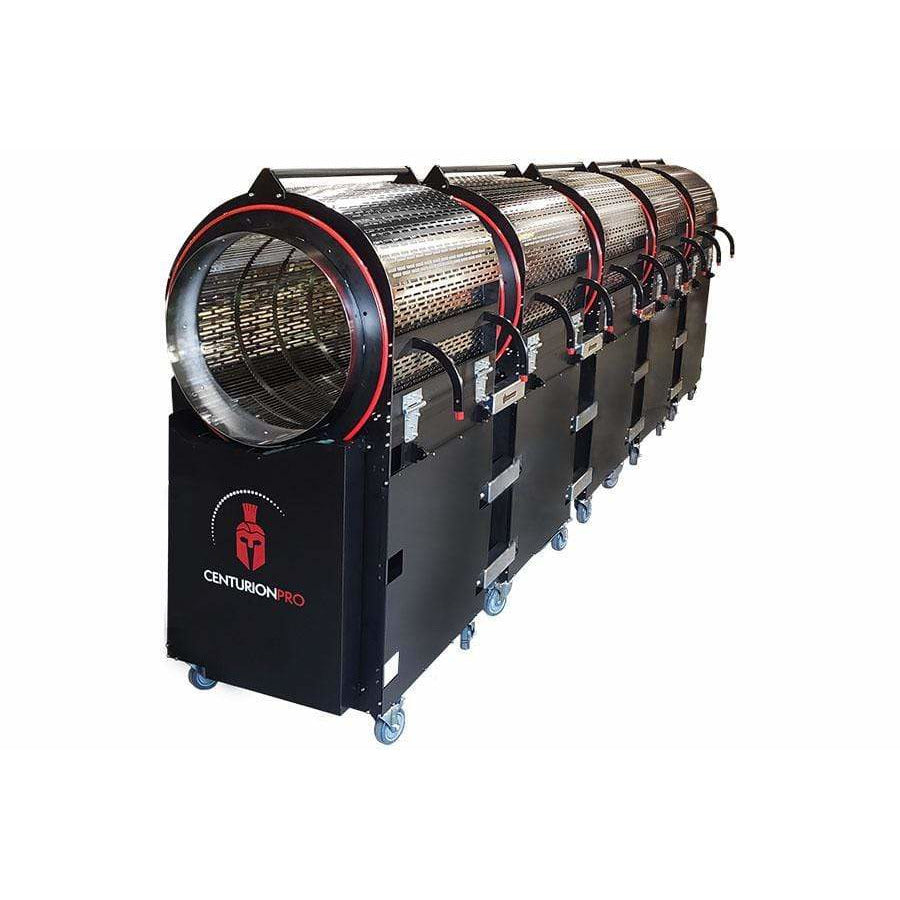
CenturionPro tandem trimmer configurations let two Gladiators or Minis run in parallel if throughput needs to grow without jumping to LP-scale equipment.
Which Trimmer Is Best at Licensed Producer Scale?
Licensed producers processing 40 lb or more per cycle need machines rated for continuous commercial operation. The shortlist narrows quickly: CenturionPro dominates this tier for Canadian buyers, with Twister as the main alternative for operations that prioritize vacuum-integrated leaf collection.
Continuous-feed with Trim Saver vacuum at LP scale
Strong choice for facilities running large wet harvests
Tandem configurations available for higher-volume production
T-Zero steps up further for the largest operations
View price
At LP scale, pairing the trimmer with a bucker substantially reduces the labor cost of prepping flower for the trim deck. The
CenturionPro GC and HP bucker families are designed to integrate directly with the 3.0+, XL5, and XL10.
Wet vs. Dry Trimming: Which Workflow Fits Your Harvest?
Wet trimming runs the machine on freshly cut, fully hydrated flower the same day it comes off the plant. Sugar leaf is turgid and cuts cleanly, the operation is fast, and trimmed bud goes straight to a drying room afterward. The trade-off is cleanup: wet flower deposits resin onto the tumbler, requiring more aggressive washing between batches.
Dry trimming runs flower that has already been dried to roughly 60 to 62% relative humidity. Sugar leaf is brittle, cleanup is dry rather than sticky, and trichome preservation is generally better because the bud is no longer compressed by water weight. The requirement is a proper drying room with disciplined moisture management before the bud hits the trimmer. One thing worth noting: machines sold as "dry-only" will technically process slightly damp flower, but the output quality drops significantly if RH at trim time is above 65%. The drum bruises the bud rather than cutting cleanly, and the result shows in the cure.
Hybrid machines like the CenturionPro Tabletop Pro, Mini, and Gladiator, the Twister T2 and T4, and the Mobius M108S can run either workflow. Dedicated dry-batch machines including the CenturionPro DBT family, GreenBroz, Tom's Tumble Trimmer, Twister BatchOne, and Mobius TD/MD series are optimized for dry-only and do not perform well on wet material.
Buying a Bud Trimmer in Canada: What Is Different?
Canadian-built options.CenturionPro is designed and manufactured in Surrey, BC, and is the only Canadian-built brand in the current lineup. Every other brand is imported.
CAD pricing and no cross-border costs. Every machine available through Trimleaf Canada is priced in CAD at checkout, with no brokerage, customs fees, or currency conversion required on top. This matters most at the LP scale, where a USD-quoted machine plus FX, duties, and brokerage fees can add thousands of dollars to the landed cost compared to a CAD-priced purchase. I've spoken with LP buyers who underestimated their landed cost on imported equipment by 20 to 30 percent because they quoted the USD list price and forgot to account for the full import cost. That gap buys a lot of machine when you're choosing between a CenturionPro and an imported alternative at the same paper price.
Power requirements. Most personal and small-commercial machines run on a standard 15A 120V circuit. Mid-commercial and LP-tier machines including the CenturionPro 3.0+, XL5, XL10, Twister T6, and Mobius M108S typically require 240V single-phase or three-phase service. Confirm your facility's electrical layout before sizing up. For a deeper look at the Canadian CenturionPro lineup and tandem upgrade paths, see the
CenturionPro Canadian buyer's guide.
Frequently Asked Questions
What is the best bud trimming machine for a Canadian home grower?
The CenturionPro Tabletop Pro is the practical first pick for most Canadian home growers. It runs wet or dry flower, operates on a standard 120V circuit, fits on a workbench, and is built in Surrey, BC. For growers who only trim dry flower and want a quieter machine at a lower cost, the GreenBroz M Lite is a better fit. The right choice depends primarily on whether you trim wet or dry.
Which automatic bud trimmer is best for a small commercial grow in Canada?
For small commercial operations running 5 to 15 lb per cycle with a mixed wet-and-dry workflow, the CenturionPro Mini is the top pick: Canadian-built, hybrid-capable, 120V, and tandem-ready. For dry-only with quiet operation, the GreenBroz M1 handles small commercial volumes cleanly. For wet-trim with integrated leaf collection, the Twister T2 covers this range with a built-in Trim Saver vacuum.
Is CenturionPro made in Canada?
Yes. CenturionPro Solutions is headquartered in Surrey, British Columbia, and the machines are designed and manufactured at their Canadian facility. It is the only Canadian-built brand currently in the lineup. All other brands sold through Trimleaf Canada are imported.
What is the difference between wet trimming and dry trimming?
Wet trimming runs freshly cut flower through the trimmer the same day it is harvested. The sugar leaf is still turgid and cuts cleanly, making this a fast workflow, but the machine requires more thorough cleaning afterward due to resin buildup. Dry trimming runs flower that has already been dried to roughly 60 to 62% relative humidity. Trichome preservation is generally better because the bud is no longer compressed by moisture, but the process requires a proper drying room and careful moisture control before trimming begins.
Do automatic bud trimmers damage trichomes?
Some trichome loss is unavoidable in any mechanical trimming method. Wet trimming on a hybrid machine tends to preserve trichomes well because the heads are firmly attached to a turgid plant. Dry trimming can be gentler on overall trichome integrity, but trichomes that have already loosened will shed during the tumble. Dedicated dry-batch machines like the CenturionPro DBT series, GreenBroz, and Mobius TD series are designed to minimize agitation. Trichomes shed during trimming collect in a kief tumbler accessory and can be recovered.
How much does an automatic bud trimmer cost in Canada?
Automatic bud trimmers range from entry-level personal machines to large commercial systems priced in the tens of thousands of dollars CAD. Personal-scale options like the EzTrim Satellite sit at the lower end of the range. Mid-tier commercial machines like the CenturionPro Mini and GreenBroz M1 fall in the mid-range. LP-scale systems like the CenturionPro XL5 or Twister T6 are at the high end. All prices through Trimleaf Canada are in CAD with no cross-border fees added on top.
Do I need a bucker if I already have an automatic trimmer?
A bucker is not strictly required, but at commercial scale it pays for itself quickly. A bucker strips flower from the main stem before it enters the trimmer, which reduces trimmer wear, improves cut quality, and prevents the tumbler from jamming on woody material. For personal and micro grows, hand-bucking is fine. For operations processing 15 lb or more per cycle, pairing the trimmer with a CenturionPro GC1 or HP1 bucker roughly halves the labor required to prep flower for the trim deck.
Derek RandalExpert Author
Lead Product Researcher & Writer
Derek leads Trimleaf's product research and editorial team, ensuring every guide, comparison, and spec sheet on this site is technically accurate and field-tested. CEA certified and a former contributor to Rosebud Magazine, he's spent years helping growers find the right equipment for their operation.